


.png)
Why Epoxy Fails: How Concrete Grinding Guarantees the Perfect Floor Coating Bond
- zoehsewell
- Jul 15
- 5 min read

We will explore exactly why epoxy floor coatings fail and how concrete grinding provides the solution you've been searching for. You'll discover the common mistakes that lead to peeling and bubbling, learn the science behind proper surface preparation, and understand why professional concrete grinding is non-negotiable for floors that actually last. Whether you're tackling a garage, warehouse, or commercial space, this information will help you make informed decisions and achieve results that stand the test of time.
What Causes Epoxy Floor Coating to Fail?
Poor Surface Preparation: The Number One Culprit
Let's be direct: surface preparation accounts for roughly 80% of coating success. When concrete grinding isn't properly prepared, even premium epoxy products will fail. The surface might look clean to the naked eye, but microscopic contaminants, weak surface layers, and inadequate profiles all conspire against your coating.
Think of it like painting a wall without sanding or priming. The paint might stick initially, but it won't last. Epoxy needs something to grip onto, and smooth, contaminated, or weak concrete simply won't provide that mechanical bond.
Moisture Issues in Concrete Grinding Slabs
Moisture is another major troublemaker. Australian concrete grinding slabs, particularly those without proper vapour barriers, can trap moisture that pushes up against your epoxy coating. This hydrostatic pressure creates bubbles, lifts edges, and eventually causes complete delamination.
Testing for moisture before application is critical. Many DIY enthusiasts skip this step, assuming their concrete grinding is dry because the surface feels dry. Unfortunately, moisture deep within the slab tells a different story.
Contaminants and Surface Impurities
Oil stains, tyre marks, paint residue, and previous sealers create invisible barriers between your epoxy and the concrete grinding. These contaminants prevent proper adhesion, no matter how good your application technique might be. Plus, choosing the wrong epoxy system for Australian conditions particularly our temperature extremes and UV exposure can accelerate failure dramatically.
Why Is My Epoxy Floor Peeling or Bubbling?
Signs Your Epoxy Coating Is Failing
Spotting early warning signs can help you address problems before complete failure occurs. Look for small bubbles forming beneath the surface, edges lifting away from the concrete, or a chalky appearance developing on the coating. Soft spots that feel different underfoot are another red flag.
Peeling typically starts at high-traffic areas or near garage doors where temperature fluctuations are most pronounced. If you notice any of these symptoms, acting quickly can sometimes salvage the situation.
How Soon Can Epoxy Failure Occur?
Here's the frustrating truth: poorly prepared epoxy can fail within weeks. Some homeowners report peeling within the first month, while others see gradual deterioration over six to twelve months. A properly applied coating over well-prepared concrete grinding, on the other hand, should last ten to twenty years with minimal maintenance.
Can Failed Epoxy Be Repaired or Must It Be Replaced?
Small areas of damage can sometimes be spot-repaired, but widespread failure usually requires complete removal and reapplication. This means grinding off the failed coating, addressing whatever caused the initial failure, and starting fresh. It's expensive and time-consuming which is precisely why getting it right the first time matters so much.
What Is Concrete Grinding and How Does It Work?
The Concrete Grinding Process Explained
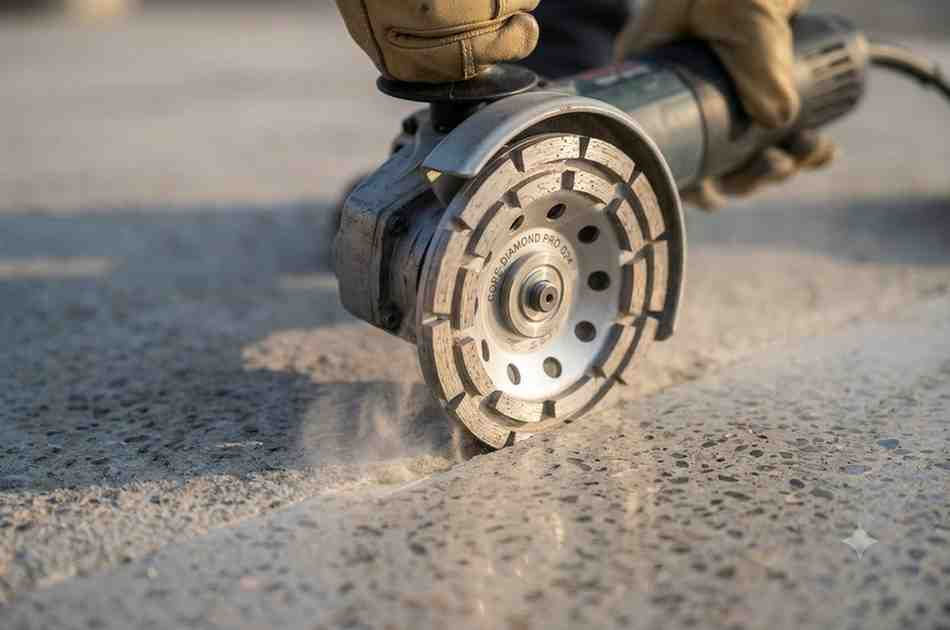
Concrete grinding uses specialised machinery fitted with diamond-impregnated segments to mechanically remove the top layer of concrete. This process creates a clean, profiled surface that's ideal for coating adhesion. The grinder moves across the floor in overlapping passes, gradually exposing fresh concrete while removing contaminants, laitance, and any existing coatings.
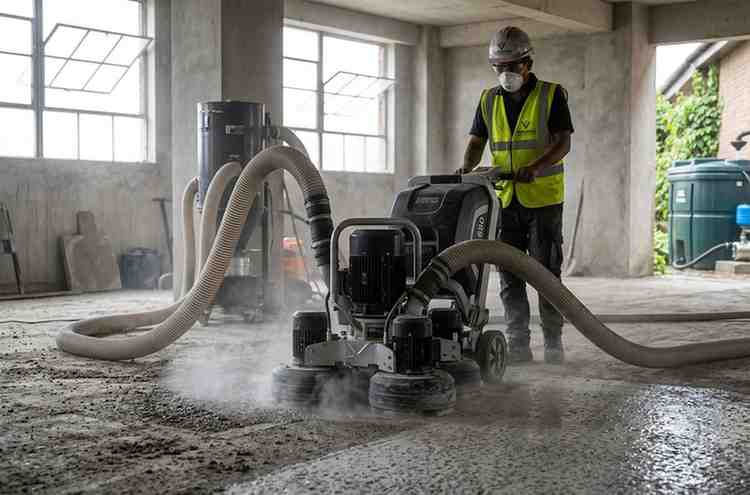
Professional grinding equipment ranges from small hand-held machines for edges and corners to large walk-behind units for open areas. The process generates dust, so reputable contractors use vacuum systems or wet grinding methods to control particles.
Diamond Grinding vs Other Surface Preparation Methods
Diamond grinding consistently outperforms alternatives like shot blasting or scarifying for most applications. It provides superior control over surface profile, creates less damage to the concrete structure, and delivers more uniform results. The diamond segments can be selected specifically for your concrete grinding hardness, making the process adaptable to different conditions.
How Long Does Concrete Grinding Take?
Timing varies based on floor size and condition. A standard double garage might take three to five hours, while a commercial warehouse could require several days. Factors affecting duration include existing coatings that need removal, concrete hardness, and the profile depth required for your chosen epoxy system.
How Does Concrete Grinding Improve Epoxy Adhesion?
Creating the Ideal Surface Profile
Surface profile refers to the texture created on concrete after preparation. Epoxy coatings require specific profile depths typically measured using the concrete grinding Surface Profile (CSP) scale. Most epoxy systems need a CSP of 2-3, which grinding achieves consistently.
This profile creates thousands of tiny peaks and valleys. When epoxy flows into these microscopic crevices, it forms a mechanical bond that's incredibly strong. Without adequate profile, epoxy simply sits on top of the concrete grinding rather than gripping into it.
Removing Laitance, Sealers and Contaminants
Laitance is the weak, powdery layer that forms on concrete grinding surfaces during curing. It's essentially concrete dust mixed with water, and it has virtually no structural strength. Grinding removes this layer completely, exposing sound concrete underneath.
What's more, grinding eliminates previous sealers, paints, oils, and other contaminants that chemical cleaning methods often miss. This fresh, clean surface is exactly what epoxy needs to form a lasting bond.
Opening Concrete Grinding Pores for Maximum Bond Strength
Beyond creating surface texture, grinding opens the pores within concrete itself. These open pores allow epoxy to penetrate slightly into the concrete grinding, creating chemical and mechanical bonds simultaneously. This penetration is impossible on sealed, contaminated, or smooth surfaces.
Do You Need to Grind Concrete Grinding Before Applying Epoxy?
When Grinding Is Essential
Grinding is essential for virtually all epoxy applications, but particularly for:
Previously coated or sealed floors
Concrete with oil contamination
Smooth, power-trowelled finishes
High-traffic commercial environments
Any floor where long-term performance matters
Garage Floors, Warehouses and Industrial Spaces
Garage floors cop significant abuse from vehicle traffic, chemical spills, and temperature swings. Warehouses face forklift traffic and heavy loads. Industrial spaces might encounter harsh chemicals or extreme wear patterns. In all these environments, skipping preparation guarantees premature failure.
What Happens If You Skip Concrete Grinding?
Without grinding, you're gambling with your investment. Best case scenario? Your coating lasts a couple of years before showing wear. Worst case? Complete failure within weeks, requiring expensive removal and reapplication. The money saved by skipping preparation invariably costs more in the long run.
Concrete Grinding vs Acid Etching: Which Is Better for Epoxy?
Comparing Results and Longevity
Acid etching using muriatic or phosphoric acid to create surface profile seems appealing because it's cheaper and easier. However, results are inconsistent and often inadequate. Acid doesn't work effectively on hard, dense concrete, and it can't remove existing coatings or heavy contamination.
Grinding delivers consistent, measurable results regardless of concrete hardness or condition. Coatings applied over ground surfaces consistently outlast those applied over acid-etched surfaces.
Environmental and Safety Considerations
Acid etching creates hazardous waste requiring careful disposal. The chemicals pose health risks during application and can damage surrounding vegetation or contaminate stormwater systems. Grinding, by contrast, produces inert concrete dust that's easily managed with proper vacuum systems.
Cost Comparison for Australian Projects
While grinding costs more upfront than acid etching, the total cost of ownership favours grinding every time. When you factor in potential coating failure, removal costs, and reapplication expenses, investing in proper grinding proves far more economical.
Investing in Proper Preparation for Floors That Last
When it comes to epoxy floor coatings, preparation truly is everything. Concrete grinding isn't an optional extra it's the foundation upon which successful coatings are built. By removing contaminants, creating proper surface profiles, and opening concrete pores, grinding sets the stage for bonds that last decades rather than months.
The initial investment in professional grinding pays dividends through extended coating life, reduced maintenance costs, and the simple satisfaction of a floor that performs as promised. Shortcuts might seem attractive, but they invariably lead to frustration and additional expense down the track.


Comments