


.png)
How Forestry Mulching is Transforming Australian Business Landscapes in 2026

Forestry mulching is changing how Aussie firms handle land, from fire‑risk cuts to quick prep for farms, construction and solar projects. By turning thick brush into a nutrient‑rich mulch in one go, Forestry mulching Slashes labour, fuel and waste while boosting soil health. And what’ll you learn? The piece breaks down eco‑wins, rules, how to pick a contractor, gear trends, cost math and real cases from NSW, VIC, QLD and TAS.
Why Forestry Mulching Matters for Australian Enterprises
Honestly, risk mitigation tops the list for most Aussie businesses. Bushfires? They're now a regular threat, so a smart mulch layer works like a fire‑break, slowing flames, cutting heat, and it cuts costs. And the ground stays wetter longer, great for Darling Downs grazing and Barossa vineyards. But when you compare it to bulldozing, you see topsoil stays put, not stripped, and erosion on the Blue Mountains’ steep slopes drops dramatically. Does that sound worth it today?
Fire‑break creation in high‑risk zones.
Soil‑structure retention and moisture retention.
Rapid clearance of up to 30 ha per day with a single machine.
Reduced haulage costs because the material stays on‑site.
Usually a client rings a mulching crew, they pull up a tracked mulcher, and in a few hours the site’s ready for seeding or building. And that single‑step method skips the separate clearing, loading and disposal steps, cutting the schedule by as much as 40 %? Sound good?
Regulatory Landscape for Forestry Mulching
Australian mulching rules differ across states, yet they all aim on protecting the environment and meeting fire‑safety standards. In New South Wales the EPA will ask you to have a “land‑clearing licence” if you’re working on more than 5 ha. And your mulching plan should show that you’ll keep native plants where you can. Queensland’s Environment and Science Department insists on a “fire‑break assessment” before you start mulching close to a national park. Got it?
NSW, EPA licence needed for mulching over 5 ha, plus a native‑vegetation plan.
And Victoria, Rural Fire Service ok if you mulch within 500 m of fire‑prone homes.
Queensland, file an impact statement for mulching in water catchments.
Tasmania, Heritage Council consent required on protected sites.
Turns out a lot of owners skip the paperwork for you and get fined. I’ve seen contractors take care of the permits, slashing weeks of back‑and‑forth with councils. And that paperwork isn’t just red‑tape; it pushes you to check soil type, slope and how close you're to watercourses. Better checks, better land, sound good?
Choosing a Qualified Forestry Mulching Contractor
When you’re hunting for a contractor, look for certifications and a track record of work in your specific region. In Melbourne, for example, the “Forestry Mulching Contractors Association” (FMCA) lists members who have completed the National Mulcher Operator Course and hold public liability insurance of at least million. A good contractor will also provide a detailed scope of work, including pre‑site surveys and post‑mulching land‑restoration recommendations.
Certified mulcher operator licence.
Public liability insurance ≥ million.
References from recent projects in the same state.
Clear, written quote with breakdown of labour, fuel and equipment hire.
Honestly, don’t just go for the cheapest quote. The cheapest operator often uses an undersized machine that can’t handle steep terrain, leading to longer work times and higher fuel consumption. I’ve seen a 12‑ton mulcher stall on a 30 % slope in the Southern Highlands, forcing the crew to switch to a smaller cutter that took twice as long.
Equipment Choices and Technology Trends in Forestry Mulching
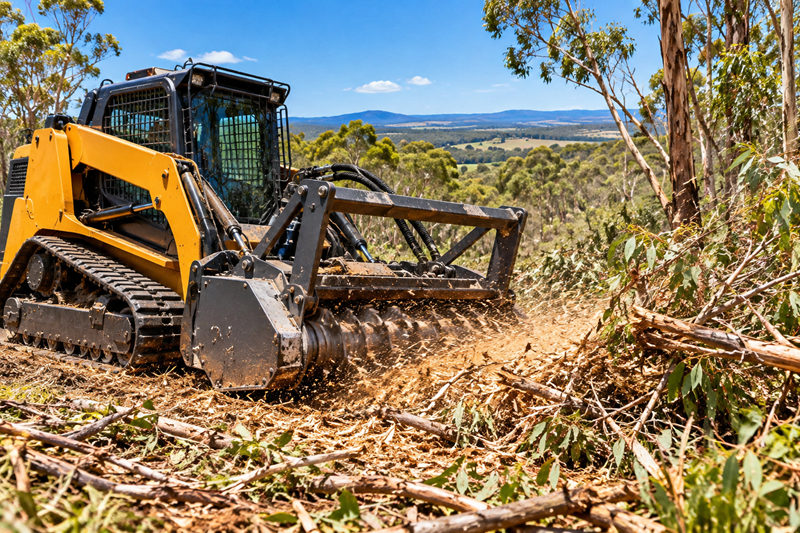
Modern Australian mulching equipment is a far cry from the bulky bulldozers of the 1990s. Today’s top machines are tracked mulchers with hydraulic rotors that can process up to 1,500 kg of biomass per hour. Brands like John Deere, Komatsu and the home‑grown “Mullion” series dominate the market, and many come with GPS‑guided auto‑steering to keep overlap to a minimum.
Tracked mulchers for steep, uneven terrain.
Hydraulic rotors with adjustable bite depth.
GPS auto‑steering for 5 % overlap reduction.
On‑board dust suppression systems for compliance with air‑quality standards.
First the operator loads the GPS with a pre‑planned line, then the mulcher takes over, chopping, shredding, spreading mulch in one go. So the crew shrinks to just a driver and a spotter on the job, instead of a whole team. Sound good?
Economic Benefits and Return on Investment of Forestry Mulching
From a business view, forestry mulching slashes costs by trimming labour, haulage and rehab work. A 15‑ha job on the Central Coast wraps up in two days, versus five for hand‑clear and seven for a burn, plus the paperwork. And that lower disturbance? It's cutting compliance fines and drops fire‑risk insurance. Ready today to save?
Labour savings: up to 60 % fewer crew members.
Haulage reduction: mulch stays on‑site, no waste transport.
Faster time‑to‑revenue for agricultural or development projects.
Lower insurance premiums due to documented fire‑breaks.
Look, I'm not exaggerating. From what I've seen, a mulching job on a grazing run usually pays back in under 18 months thanks to better pasture growth and lower fire‑damage risk. And the carbon‑sequestration perk (about 1.2 tonnes of CO₂ locked per tonne of mulch) adds extra value for local firms reporting under the Australian Safeguard Mechanism.
Regional Case Studies: Forestry Mulching in the Hunter Valley, Central Coast, and Tasmania
Let’s check out a few real‑world cases. In the Hunter Valley a vineyard owner turned to forestry mulching to rip out invasive blackberry thickets choking the irrigation lines. And the mulcher tackled 20 ha in just 1.5 days, then the mulch was spread under the vines. Soil organic matter jumped 3 % in six months. Sounds good?
Hunter Valley: 20 ha blackberry clearance, 3 % soil organic boost.
Central Coast: 15 ha bushfire‑break creation, 40 % faster project start.
Tasmania: 10 ha erosion control on a steep slope, 25 % reduction in runoff.
After mulching, land managers can jump straight into reseeding native grasses or planting fresh crops. And in Tasmania the mulched slope later got native tussock grass, which now holds the soil together and gives a home to the endangered Tasmanian pademelon. So, sounds good?
Integrating Forestry Mulching into Sustainable Land‑Management Plans
Thinking long‑term, you’ll want mulching woven into any land‑restoration plan. And once the mulch is down, what’s next? First, check soil nutrients; second, sow a native seed mix; third, set up erosion fences where they’re needed; finally, keep an eye on regrowth with drone imaging in the field.
Soil testing 2 weeks post‑mulch.
Native seed mix selection based on regional flora.
Erosion control fencing on slopes >20 %.
Quarterly drone surveys for vegetation health.
And remember it's a water‑quality thing. Mulch works as a natural filter, snagging sediment before it hits the streams. Ever wonder how it helps? In the Murray‑Darling Basin, mulching along river corridors can slash suspended‑solid loads by up to 30 % when the rains come.
Conclusion: Forestry Mulching Impact
Forestry mulching is now a key tool for Aussie businesses that need fast, safe and environmentally sound land‑clearance today. It slashes costs. It also builds fire‑breaks, lifts soil health and syncs with carbon‑offset plans. So, choose a certified contractor, obey state rules and weave mulching into your land‑management plan, you’ll protect assets and keep productivity up for years.


Comments