


.png)
Sewer Cut Back Explained: A Smart Fix for Root Blocked Drains
- Lauren Bracy
- May 11
- 6 min read

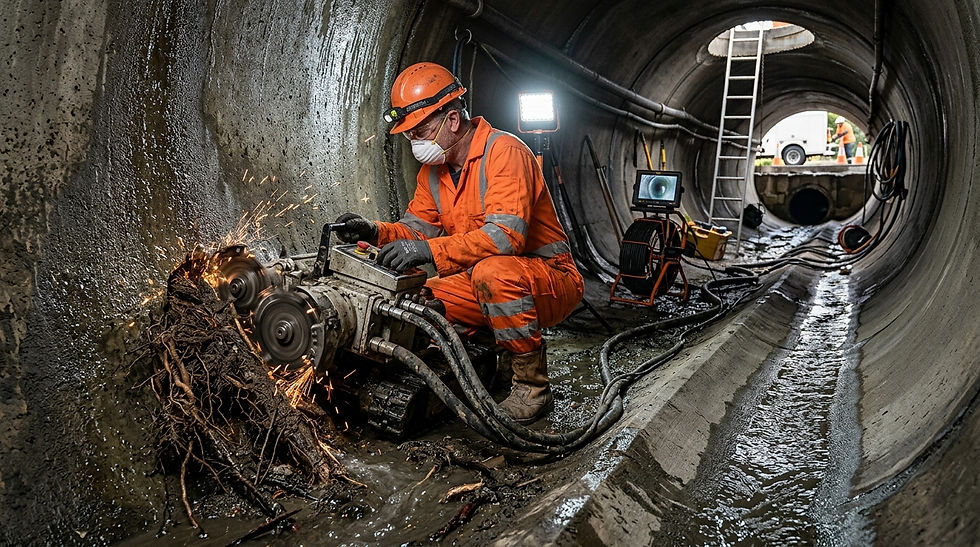
If you own a home in Australia, you have probably seen a garden full of native trees, a backyard barbie, and a busy household. All of these are great, until a tree root finds its way into your sewer line and creates a stubborn blockage. One of the most effective ways to restore flow without tearing up the whole yard is a Sewer Cut Back. This guide walks you through what a sewer cut back is, why it matters in an Australian context, and how to choose the right plumbing service to get the job done right.
What Is a Sewer Cut Back?
Definition
A Sewer Cut Back is a targeted repair technique that removes a short section of a damaged or obstructed sewer pipe, usually the part that has been compromised by tree roots, corrosion, or collapse. Instead of replacing the entire line, the plumber cuts out the faulty segment, cleans the remaining pipe, and reconnects it with a new piece or a flexible liner. The result is a restored drainage system with minimal excavation.
How It Works
1. Locate the problem – A camera inspection shows exactly where the root intrusion occurs. 2. Mark the cut point – The plumber identifies a safe access point, often at a clean out or a shallow trench. 3. Excavate just enough – Only a small area around the damaged section is dug up, preserving lawns and landscaping. 4. Cut and remove – A specialized saw or pipe cutter removes the compromised pipe length. 5. Install a new section – A fresh pipe segment, often PVC or HDPE, is fitted and sealed with solvent cement or rubber gaskets. 6. Test the repair – Water is run through the line and a second camera check confirms clear flow.
Why Root Blockages Are Common in Australia
Climate and Trees
Australia’s warm climate encourages fast growing trees such as eucalyptus, jacaranda, and pine. These species develop extensive root systems that search for water and nutrients. When a sewer line runs close to a tree, the roots can infiltrate cracks, joints, or pipe fittings, especially in older clay or cast iron pipes.
Typical Residential Layouts
In many Australian suburbs, homes are built on modest lot sizes with a single underground sewer line that runs from the house to the street. The line often passes under gardens, driveways, and pool areas, making it vulnerable to root intrusion. Because the pipe is usually buried only a few hundred millimetres deep, any shift in soil moisture can cause the pipe to settle and crack, inviting roots inside.
When to Consider a Sewer Cut Back
Signs & Symptoms
Slow draining sinks, showers, or outdoor taps.
Gurgling noises from drains, especially after heavy rain.
Foul odours emanating from the yard or inside the house.
Wet spots or sinkholes in the garden near the sewer line.
Repeated clogs despite regular drain cleaning.
Inspection Methods
A professional plumber will usually start with a sewer inspection camera that slides through the pipe and records video. This non invasive method pinpoints the exact location and severity of root intrusion, allowing the plumber to decide whether a Sewer Cut Back is the most efficient solution.
The Sewer Cut Back Process
Step 1: Assessment
The plumber reviews the camera footage, checks for any structural damage, and measures the length of pipe that needs removal. They also verify local council requirements, as some jurisdictions require a permit for any underground work.
Step 2: Cutting the Pipe
Using a portable pipe cutter or a reciprocating saw, the plumber makes clean cuts on both sides of the damaged section. The cuts are made at a straight angle to ensure a tight fit for the new pipe piece.
Step 3: Cleaning and Sealing
After the old segment is removed, the remaining pipe ends are cleaned of debris and roots. A new pipe segment commonly PVC for residential lines is then inserted. The joints are sealed with solvent cement, rubber gaskets, or a mechanical coupling, depending on the pipe material.
Step 4: Post Work Testing
Water is flushed through the repaired section while the plumber monitors flow with the camera. If the pipe is clear and there are no leaks, the excavation is backfilled, and the surface is restored.
Benefits of a Sewer Cut Back
Cost Effectiveness
Because only a small portion of the pipe is replaced, material and labour costs are significantly lower than a full pipe replacement. Homeowners often save 30 50 % compared with traditional excavation.
Minimal Disruption
A targeted cut back requires a narrow trench, which means less damage to lawns, driveways, and landscaping. In many cases, the work can be completed in a single day, allowing families to return to normal activities quickly.
Longevity
When a high quality pipe material is used and the joint is properly sealed, the repaired section can last for decades. The surrounding pipe is also protected from further root intrusion if a root barrier is applied during the repair.
Regulations and Standards in Australia
AS 3500 and Local Council Approvals
The Australian Standard AS 3500 Plumbing and Drainage – Part 2: Sanitary Plumbing sets the technical requirements for sewer installations and repairs. Most state and territory councils adopt this standard and may require a permit for any underground work, especially if the cut back involves pipe diameters larger than 100 mm.

Licensing Requirements
Only a licensed plumber can legally perform a Sewer Cut Back in Australia. Licences are issued by state bodies such as the NSW Fair Trading, Victoria’s Building Authority, and Queensland’s Department of Housing and Public Works. Homeowners should ask to see a copy of the plumber’s licence before work begins.
Environmental Considerations
Many Australian councils encourage the use of environmentally friendly materials. Replacing a damaged pipe with HDPE (high density polyethylene) reduces the risk of future corrosion and can be recycled at the end of its life. Additionally, proper disposal of excavated soil and old pipe sections is required to prevent contamination.
Choosing the Right Plumbing Service
What to Look For
Valid plumbing licence and insurance.
Experience with sewer cut back procedures.
Access to a modern inspection camera and cutting tools.
Clear, written estimate that includes permits and clean up.
Positive local reviews and references.
Questions to Ask
Do you provide a written report with camera footage?
What pipe material do you recommend for the replacement?
Will you apply a root barrier after the cut back?
How long will the work take and when can you start?
What warranty do you offer on the repair?
Questions and Answers: Common Questions About Sewer Cut Back in Australia
Q: What is the difference between a sewer cut back and a full pipe replacement?
A: A sewer cut back removes only the damaged portion of the pipe and replaces it with a new short segment, whereas a full pipe replacement involves excavating the entire line and installing new pipe from end to end. Cut back is quicker, cheaper, and less disruptive.
Q: Do I need a council permit for a sewer cut back?
A: Most Australian councils require a permit for any underground work that alters the sewer network, even if the work is limited to a short section. Your plumber should handle the permit application and ensure the repair meets AS 3500 standards.
Q: How long does a sewer cut back usually take?
A: From inspection to final testing, a typical residential sewer cut back can be completed in one to two days, depending on weather, access, and the length of pipe being replaced.
Q: Can I prevent future root blockages after a cut back?
A: Yes. After the repair, many plumbers install a root barrier a thin, impermeable sleeve around the pipe to stop roots from re entering. Regular camera inspections and occasional hydro jet cleaning also help keep the line clear.
Q: Is a sewer cut back a DIY job?
A: Because the work involves specialized tools, accurate pipe cutting, and compliance with local regulations, it is not suitable for DIY. Attempting it without a licence can lead to voided warranties, fines, and further damage.
Conclusion: Your Path to a Successful Sewer Cut Back in Australia
A Sewer Cut Back offers a practical, cost effective solution for homeowners dealing with root blocked drains. By understanding the local climate, regulations such as AS 3500, and the steps involved in the repair, you can make an informed decision and choose a reputable, licensed plumbing service. Remember to ask for a camera inspection, confirm permits, and discuss root barrier options to protect your line for years to come. With the right approach, you’ll restore smooth drainage, protect your garden, and keep your home’s plumbing system healthy without the hassle of a full scale excavation.


Comments